The Quiet Science of a Perfect Cup of Chai
Chai looks simple: tea, milk, spice, sugar. But the order you add them, and how long you let them simmer, changes everything about the cup.
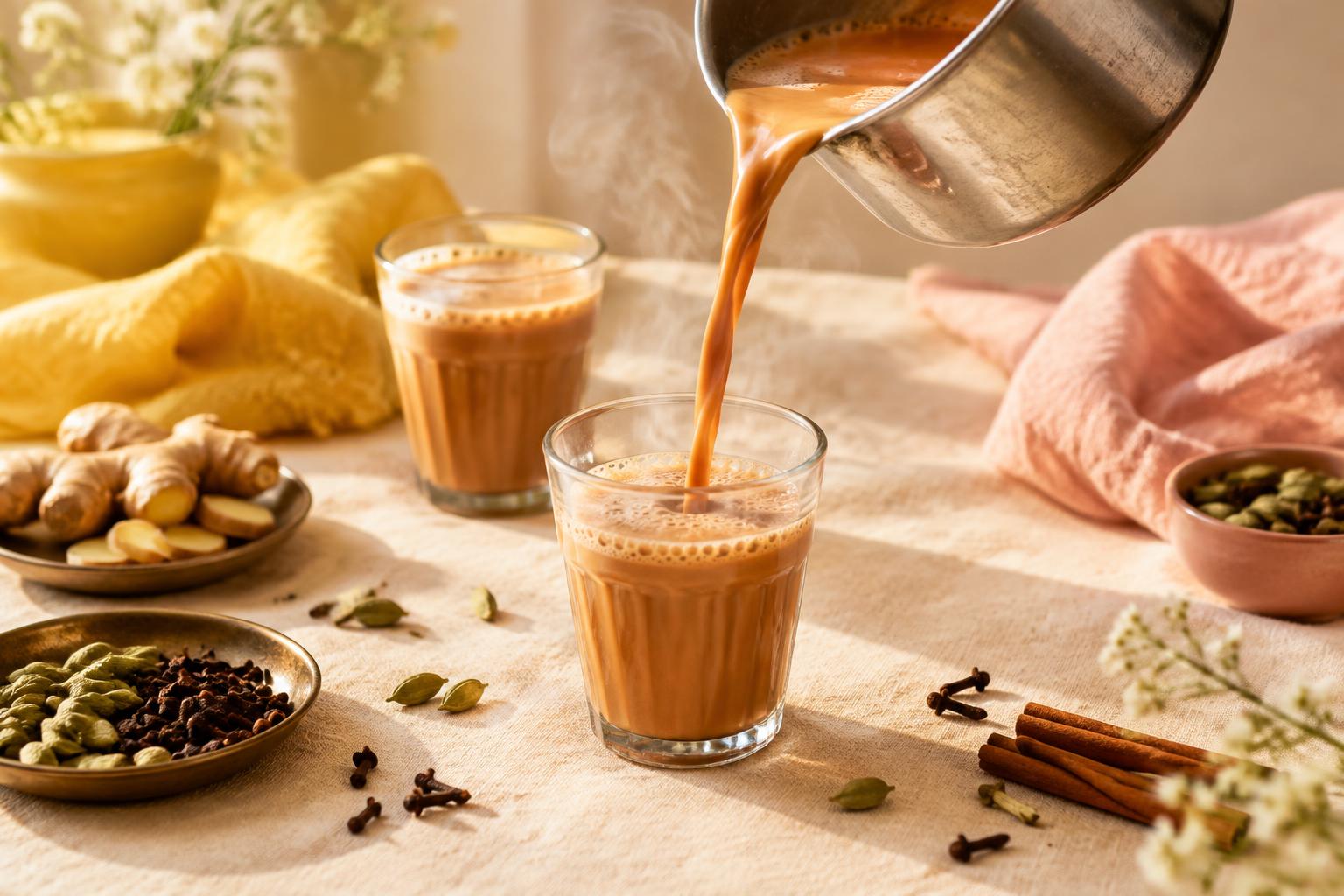
Table of contents
In much of India, chai is less a drink than a punctuation mark. It opens the morning, interrupts the afternoon and closes conversations. Almost everyone has a version they swear by — and most of them are made without measuring anything at all.
Still, a few small principles explain why one cup tastes rich and rounded while another tastes thin or bitter.
Spices first, in water
The flavours in ginger, cardamom, cinnamon and cloves dissolve better in hot water than in milk. Start by simmering crushed spices in water for a couple of minutes. Fresh ginger should be grated or pounded, not sliced — more surface area means more flavour in less time.
Then the tea
Strong black tea, usually Assam CTC granules, goes in once the water smells fragrant. Let it boil briefly until the liquid turns a deep reddish brown. This is where the body of the chai comes from.
Milk, and patience
Add milk and bring it up to a boil, then lower the heat and let it simmer. Many chai-makers let it rise and fall two or three times. This gentle reduction is what gives a good cup its creamy, slightly caramelised taste. Sugar can go in with the milk.
- For two cups: 1 cup water, 1 cup milk, 2 teaspoons tea, 2 teaspoons sugar.
- A thumb-sized piece of ginger and 2–3 crushed cardamom pods.
- Optional: a small piece of cinnamon, 2 cloves, or a few tulsi leaves.
“Each cup of tea represents an imaginary voyage.”
Key takeaways
- Simmer spices in water before adding tea or milk.
- Let the tea boil until deeply coloured before the milk goes in.
- A slow simmer after the milk is what makes chai taste rich.

Written by
Aniket Bhalerao
Founder of Northfold. Writes on technology, business, psychology and the craft of writing.
View profile & all stories →